 Log in with Mozaik
 Log in with Pluriportail
 Log in with COBA Pédagogie

Digital Competency
Digital competency refers to an integrated set of knowledge, skills and attitudes that enable confident, critical, creative, responsible and sustainable use of digital technology. Such use is grounded in respect for ethics, safety, individual and collective well‑being, the environment and inclusion, with the aim of enabling people to learn, work and participate fully in society.
Additional content is available on the French page.
The twelve dimensions of the Framework
The Digital Competency Framework is organized into 12 interconnected dimensions (D), which apply to a variety of school or professional contexts, or to everyday life.
- D1 – Exercising ethical citizenship in the digital age
- D2 – Developing and mobilizing technological skills
- D3 – Harnessing the potential of digital resources for learning
- D4 – Developing and mobilizing information literacy in the digital age
- D5 – Collaborating using digital technology
- D6 – Communicating using digital technology
- D7 – Producing content using digital technology
- D8 – Using digital tools to address diverse needs
- D9 – Mobilizing digital technology for personal and professional empowerment
- D10 – Solving various problems using digital technology
- D11 – Developing critical thinking with regard to the use of digital technology
- D12 – Adopting a creative and innovative approach to the use of digital technology
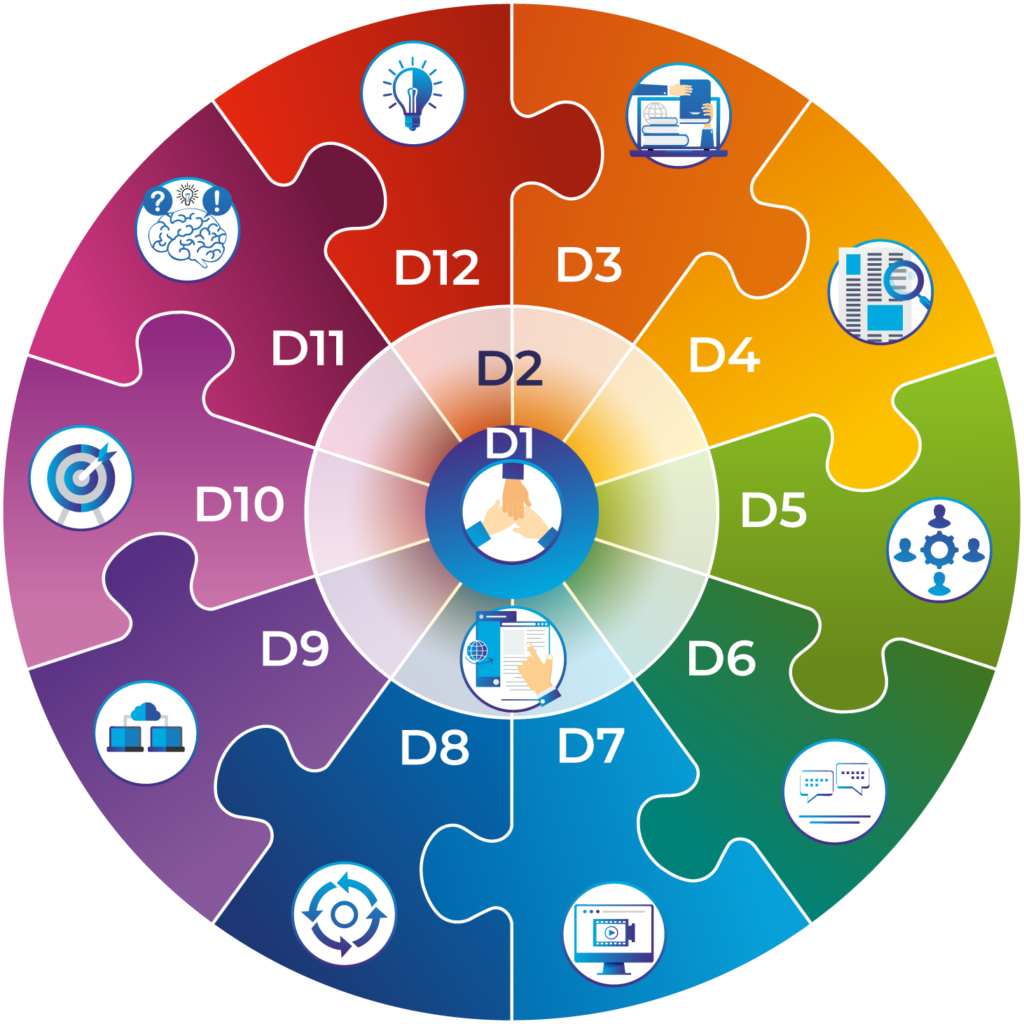
For more information, see the Digital Competency Framework.
Content for Developing Digital Competency
The development of digital competency is a lifelong process. The content for developing digital competency aims to prepare students to use digital technology in a thoughtful, safe and responsible manner. It enables them to acquire a solid foundation that will guide them throughout their schooling as well as in their personal and professional lives.
Artificial intelligence
Guide to the Pedagogical, Ethical and Legal Use of Generative Artificial Intelligence
This guide provides specific criteria and avenues for reflection and action that encourage the critical, thoughtful and responsible use of generative artificial intelligence for teachers and other education stakeholders who work with students.
Additionally, a complementary tool brings together the reflection questions related to each criterion in the guide. A webinar (in French only) is also available for school staff.
“AI in Education: Is It a Good Thing, or Not?” – Short informative videos on artificial intelligence (AI)
This series of five short videos is intended to provide information about different aspects of artificial intelligence. The videos are primarily designed for parents, and help contribute to the development of digital competency and critical thinking about the impacts of AI. They help provide young people with support and guidance in using AI and are a practical reference tool for school staff.
Developing digital competency
Integrating digital technologies in the classroom
RÉCIT consultants support the entire school network in fostering the development of student competencies through digital technology.

